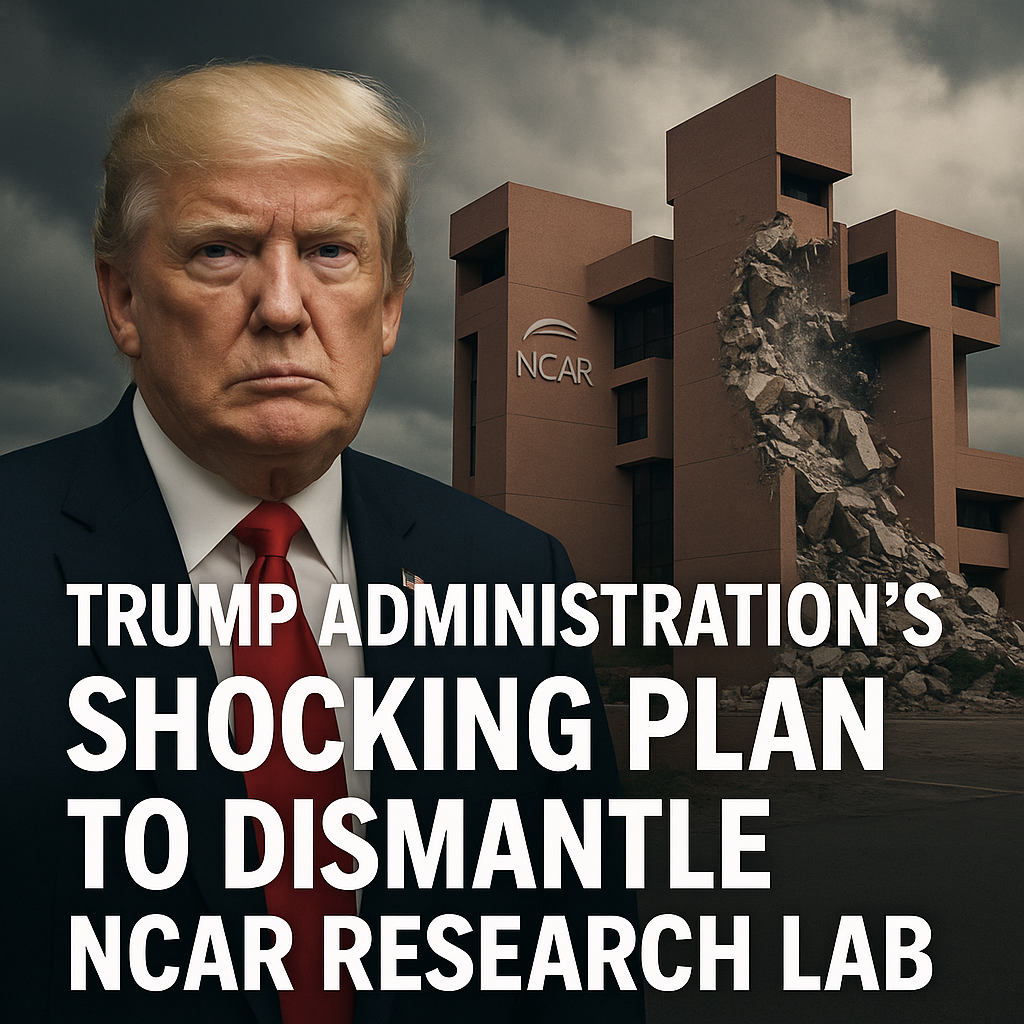
Trump Administration’s Shocking Plan to Dismantle NCAR Research Lab
The Trump administration’s shocking plan to dismantle the National Center for Atmospheric Research (NCAR) research lab sent ripples through the scientific community and beyond. As one of the premier institutions in atmospheric sciences, NCAR plays a vital role in advancing our understanding of weather, climate, and environmental processes. The announcement not only raised concerns about the future of climate research in the United States but also sparked an intense debate about science policy and national priorities.
The Role and Importance of NCAR
NCAR, located in Boulder, Colorado, is a federally funded research and development center that collaborates with the National Science Foundation (NSF) and various universities. It serves as a hub for scientists studying atmospheric and related Earth system sciences. The center’s contributions range from improving weather forecasting to analyzing climate change impacts, helping policymakers and societies prepare for environmental challenges.
Its comprehensive research portfolio includes modeling atmospheric phenomena, conducting field experiments, and running high-performance computing facilities that simulate complex climate systems. Many breakthroughs in meteorology, climate science, and environmental data analysis have emerged directly from this institution’s efforts. With decades of history supporting science-based decision-making, NCAR has built an invaluable knowledge base crucial to both national security and public safety.
What the Trump Administration Proposed
The plan reportedly aimed to significantly reduce funding and support for NCAR, effectively dismantling large parts of its infrastructure. While details were initially sparse, leaked documents and statements made by administration officials suggested a strategic shift away from federal-supported climate research. The move aligned with broader policy trends under the administration that emphasized deregulation and questioned the extent of human-driven climate change.
Officials framed the proposal as a cost-cutting measure and a way to redirect resources toward other priorities such as economic development, energy exploration, and national defense. However, critics argued that it was a politically motivated decision that ignored scientific consensus and jeopardized critical research capabilities.
Potential Consequences for Atmospheric Science
The ramifications of dismantling NCAR’s research lab could be extensive and long-lasting. Cutting funding and limiting NCAR’s operations risks slowing or halting crucial projects that improve climate models and weather prediction accuracy. This has direct implications for disaster preparedness, agriculture, water management, and global climate policy.
Furthermore, NCAR serves as a training ground for the next generation of atmospheric scientists. Undermining the lab could lead to a “brain drain,” where top researchers seek opportunities abroad or in private sector jobs, weakening America’s leadership in atmospheric and environmental sciences.
On the international stage, NCAR contributes to global scientific collaborations that inform climate negotiations and adaptation strategies. Less engagement from a U.S.-based institution could diminish the country’s influence in shaping global responses to climate change.
The Scientific Community’s Response
From the moment news of the plan spread, the scientific community voiced strong opposition. Researchers, university partners, and advocacy groups underscored the risks to national interests and public safety. Letters signed by hundreds of scientists called on Congress to ensure continued support for NCAR, emphasizing the critical nature of its work.
Prominent atmospheric scientists publicly stated that the dismantling plan ignored decades of scientific progress and would undermine U.S. competitiveness in science and technology. Many framed it as a short-sighted political move that failed to recognize the importance of climate and environmental research in an era defined by extreme weather events and global warming.
Broader Implications for Science Policy
The attempt to dismantle a key research institution such as NCAR reflected broader tensions in U.S. science policy during the Trump administration. It illustrated the clash between political agendas and scientific evidence, a dynamic that affected other areas such as environmental protections, public health research, and funding for foundational sciences.
Opponents feared that targeting NCAR could set a precedent for dismantling other federally funded research entities crucial to understanding complex societal challenges. The controversy highlighted the importance of maintaining political support for scientific institutions to foster innovation, resilience, and evidence-based policymaking.
Moving Forward: Protecting Atmospheric Research
In response to these threats, Congress opted to maintain and sometimes increase funding for NCAR, recognizing the center’s indispensable role. Policymakers across party lines expressed support for robust scientific research as a means of protecting communities and ensuring economic stability in the face of climate change.
This episode served as a wake-up call about the vulnerability of scientific organizations to political shifts. It underscored the need for an informed public dialogue about the value of research institutions like NCAR and increased efforts to shield science from partisan conflicts.
Conclusion
The Trump administration’s shocking plan to dismantle the NCAR research lab was more than just a budgetary proposal; it represented a significant challenge to scientific integrity and climate research in the United States. Although the plan ultimately faced substantial pushback, it exposed how critical it is to safeguard the institutions that provide the knowledge base for addressing some of the world’s most urgent environmental issues. Moving forward, continued investment in and protection of atmospheric research is essential for ensuring a safer, more informed future.