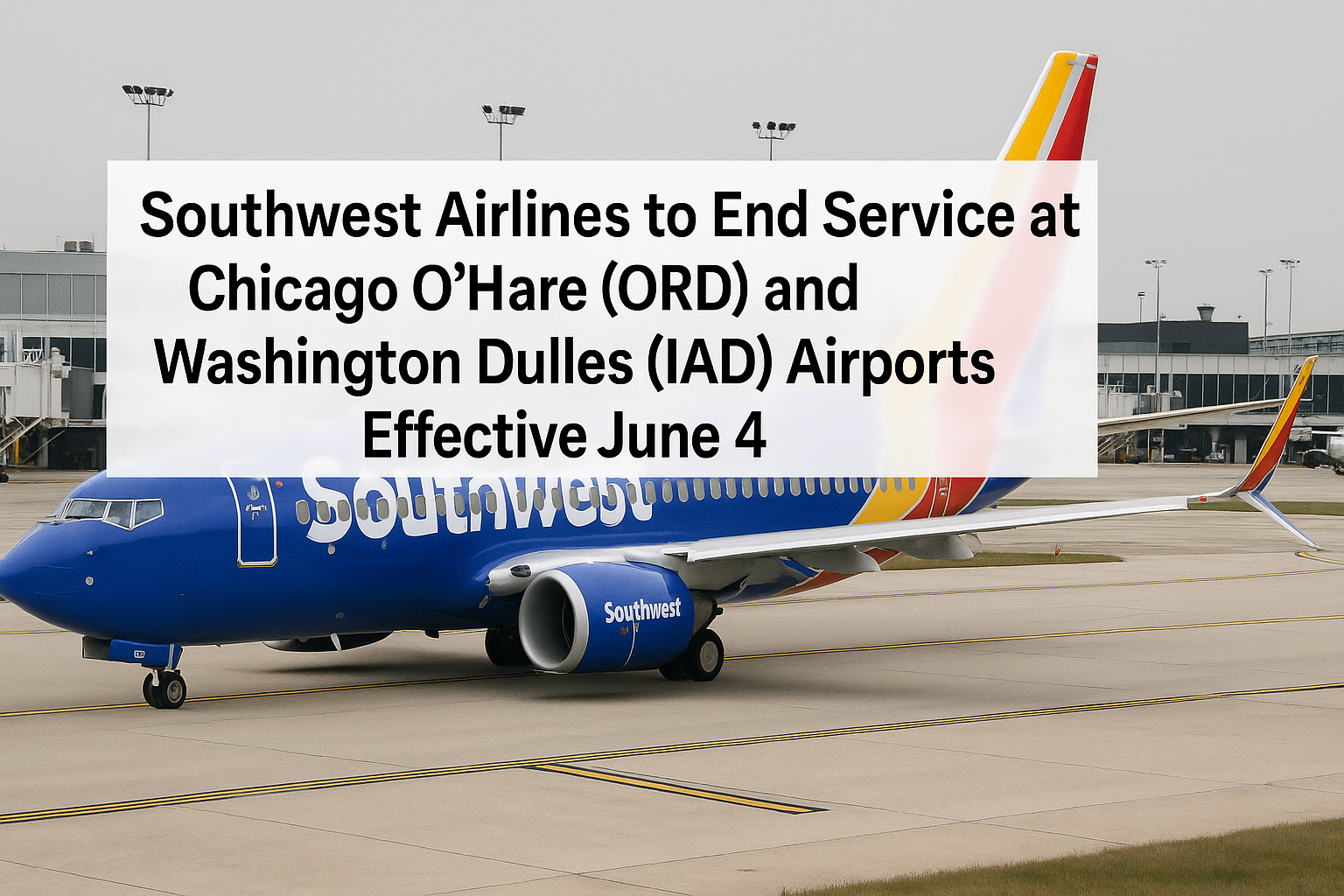
March 13, 2026 — Dallas, Texas Southwest Airlines announced it will discontinue all flights to and from Chicago O’Hare International Airport (ORD) and Washington Dulles International Airport (IAD) effective June 4, 2026, redirecting Chicago-area service to Midway International Airport (MDW) and Washington-area service primarily to Reagan National Airport (DCA).
The decision marks the end of a five-year presence at ORD, which began as a 2021 “experiment,” and a brief stint at IAD, as the carrier refines its network amid operational challenges and capacity constraints. Southwest will maintain access to Chicago and the D.C. area through its established hubs at MDW and DCA, where it has a long history of operations.
Network Optimization and Impacts
Southwest described the move as part of broader network refinement efforts, citing competitive pressures from American Airlines and United at ORD. The changes affect approximately 30 routes, including connections from cities like Phoenix, with no service to, from, or through ORD or IAD after June 4. Affected passengers have been notified via email and can rebook on alternative flights without fees, according to AirlineGeeks and Chicago Sun-Times reports.
Local outlets highlighted the shift’s implications. WTTW Chicago News noted Southwest’s longstanding dominance at MDW, while Dallas Morning News pointed to slot constraints and competition at ORD.
Passenger and Industry Reaction
Passengers received direct notifications about the Southwest Airlines to End Service at Chicago O’Hare (ORD) and Washington Dulles (IAD) Airports decision, sparking concerns over route eliminations between popular cities. Simple Flying framed ORD operations as an unsuccessful trial due to operational hurdles.
On X, aviation enthusiasts and travelers discussed potential mass cancellations and itinerary changes. Posts from accounts like @Aviationa2z highlighted eliminated routes, while others shared links to coverage from Fox Business and similar outlets (example post, another).
Southwest emphasized continued city access via alternative airports, aligning the cuts with ongoing capacity management.