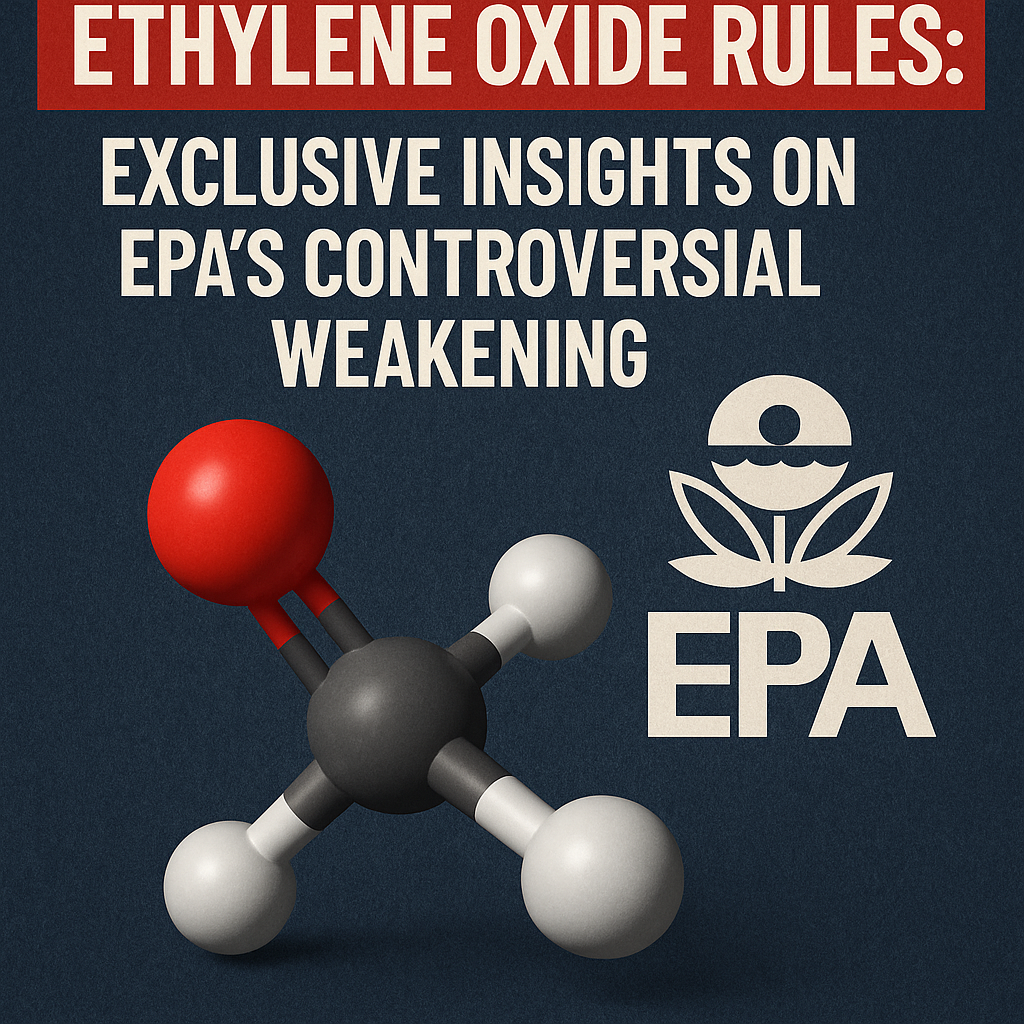
Ethylene Oxide Rules: Exclusive Insights on EPA’s Controversial Weakening
Ethylene oxide, a chemical widely used in sterilization processes and manufacturing, has recently been at the center of a heated debate due to changes in regulatory oversight. The Environmental Protection Agency (EPA) has proposed significant adjustments to the rules governing emissions of ethylene oxide, sparking controversy among environmentalists, health advocates, industries, and policymakers. Understanding the nuances behind these regulatory changes is crucial, not only because of ethylene oxide’s toxicity but also due to the implications for public health and environmental protection.
What is Ethylene Oxide and Why Does It Matter?
Ethylene oxide (EtO) is a colorless gas used primarily for sterilizing medical equipment and in producing chemicals like antifreeze and detergents. While exceptionally effective in eliminating harmful bacteria and viruses, EtO is classified as a human carcinogen. Prolonged exposure, even at low levels, can increase the risk of developing cancers such as leukemia and lymphoma. Moreover, there is growing concern about its ability to cause neurological damage and reproductive issues.
Given these hazards, regulating ethylene oxide emissions from industrial facilities is critical. Airborne contamination may impact nearby communities, posing health risks especially to vulnerable populations such as children and the elderly.
The EPA’s Ethylene Oxide Rules: Background and Evolution
Historically, the EPA has set limits on permissible emissions of ethylene oxide under the Clean Air Act, focusing on minimizing leaks from sterilization plants and chemical manufacturers. These regulations have evolved in response to scientific research, monitoring data, and increased public scrutiny.
The last few years have seen heightened attention on EtO release due to findings of elevated cancer risk in communities living near certain facilities, documented through environmental studies and toxic inventories. In response, the EPA initiated a series of more stringent rules aimed at curbing emissions and protecting public health.
The Controversial Weakening of Ethylene Oxide Rules
Despite previous moves toward stricter control, the EPA’s recent decision to relax some aspects of the ethylene oxide rules has raised alarms. The “weakening” involves adjustments such as easing reporting requirements, extending compliance deadlines, and modifying the thresholds for emission limits.
Why the Rollback?
The EPA argues that these changes are necessary to reduce regulatory burdens on businesses, particularly small and medium-sized enterprises that face high compliance costs. They contend that the latest scientific data justifies a more balanced approach, aiming to safeguard public health while supporting economic activity.
Industry representatives have welcomed this approach, stating that overly stringent regulations hamper innovation and competitiveness. Conversely, many environmental and community groups believe these rollbacks disregard established science and compromise safety, effectively lowering protections for populations at risk.
Public Health Implications of Loosening Ethylene Oxide Regulations
Relaxing ethylene oxide rules could have direct consequences on air quality and health outcomes. Communities near sterilization and chemical plants often include minority and economically disadvantaged populations, which environmental justice advocates highlight as a key concern.
Analyses suggest that even small increases in EtO emissions could lead to measurable rises in cancer incidence over time. Additionally, gaps in monitoring may delay detection of harmful exposure levels, reducing the ability of officials to respond proactively.
Health officials emphasize the importance of precaution, urging regulation that prioritizes the welfare of residents over industrial convenience.
Balancing Industry Needs and Environmental Safety
Finding a middle ground is complex. The industries involved produce essential medical products and chemicals integral to everyday life. Overly restrictive rules might lead to facility closures or offshoring production, which can have economic drawbacks and supply chain challenges.
However, sustained neglect of environmental safeguards risks long-term health costs and environmental degradation, often disproportionately impacting marginalized communities.
What’s Next? Monitoring and Advocacy
In light of these regulatory shifts, ongoing monitoring and community engagement are essential. Independent studies, transparent reporting, and public participation in decision-making processes can help ensure accountability.
Advocacy groups continue to push for reinstating stronger controls and increasing funding for environmental health research, emphasizing that short-term economic interests should not override public safety.
Conclusion: Navigating the Future of Ethylene Oxide Regulation
The EPA’s decision to weaken rules on ethylene oxide emissions marks a significant turning point in environmental policy. While aimed at reducing industry strain, it brings into focus the critical balance between economic growth and protecting human health. For communities, regulators, and industries alike, vigilance and informed dialogue are key to navigating this evolving landscape.
Ultimately, the debate around ethylene oxide rules underscores a broader question: how can society best regulate toxic substances to ensure safe environments while fostering innovation and economic vitality? The answers will likely shape regulatory approaches for years to come.