Republican Rift Over Schools in Idaho: Exclusive Deep-Red Debate Revealed
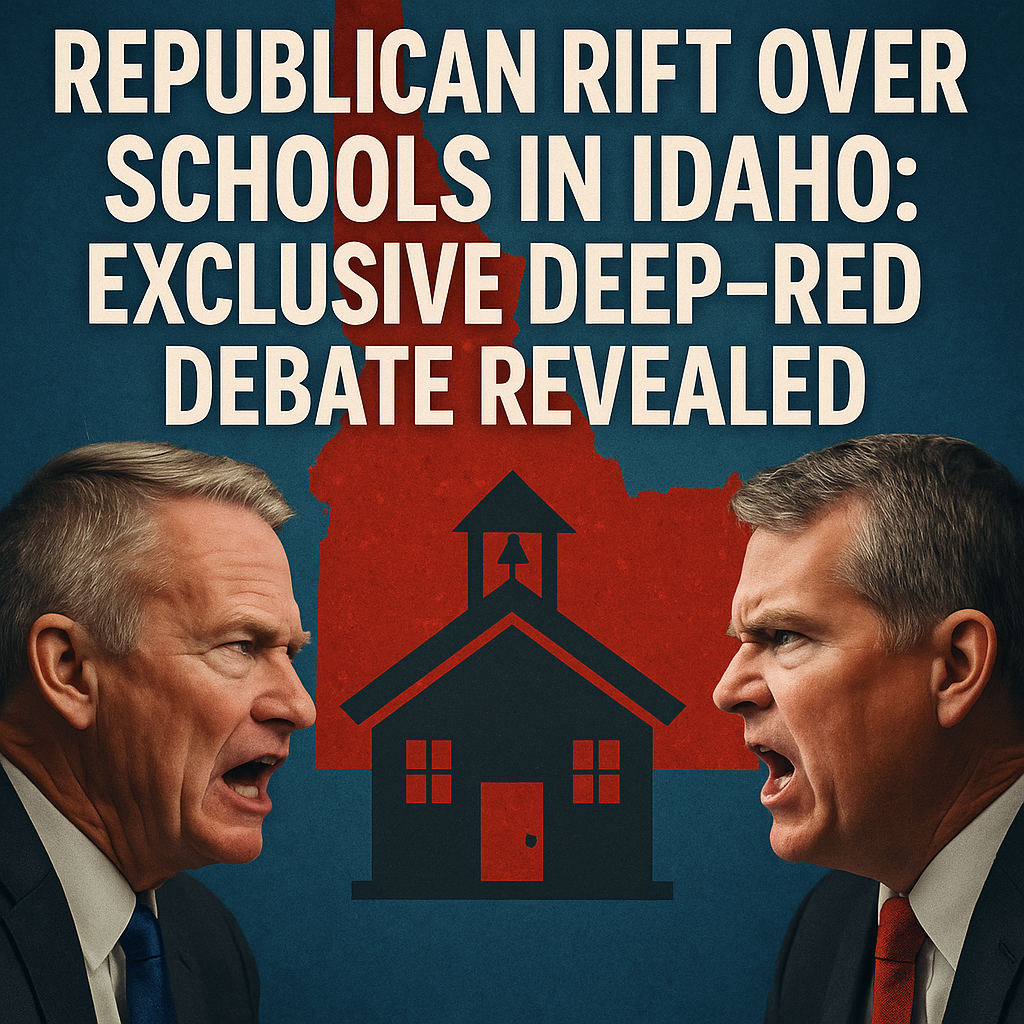
In Idaho, long known as a stronghold for Republican politics, a surprising rift has emerged over the direction of public education. This internal debate within the state’s Republican ranks signals a deeper division among conservatives on how best to handle school policies amid nationwide discussions on education content, funding, and parental involvement. The Republican rift over schools in Idaho has captivated political observers and residents alike, providing an exclusive glimpse into the complex dynamics shaping education in a deeply red state.
Deep-Red Idaho Faces Complex School Policy Challenges
Idaho’s conservative identity has traditionally been uniform, with Republican lawmakers holding significant majorities across state and local government levels. However, this political unity is facing a test as competing viewpoints about public schooling come to the fore. At the heart of the debate are issues such as curriculum standards, school choice, parental rights, and the role of state oversight.
Parents and grassroots activists, many aligned with conservative values, have increasingly demanded more control over what children learn and how schools operate. They argue that local school boards must prioritize transparency and resist what they see as controversial topics, including sex education frameworks, discussions on race and history, and the extent of federal influence on state education policies.
Conversely, some Republican leaders and educators advocate for measured approaches that balance parental input with professional expertise and evidence-based education standards. They caution against politicizing schools to the point of undermining teacher autonomy and educational quality.
Key Issues Driving the Republican Rift Over Schools in Idaho
Several flashpoints have crystallized the divide within Idaho’s Republican community:
Curriculum Content and Critical Race Theory
One of the most contentious topics has been how schools address America’s complicated history, especially race-related issues. Some factions label critical race theory (CRT) as a harmful ideology infiltrating Idaho classrooms, demanding outright bans and extensive revisions of history and social studies classes. Opponents of this stance emphasize the importance of honest historical education that prepares students to engage thoughtfully with societal challenges.
School Choice and Voucher Programs
School choice remains a cornerstone issue for many conservatives nationwide, and Idaho is no exception. Some Republicans support expanding voucher programs to allow parents to use public funds for private and charter schools, believing this fosters competition and improves education quality. However, others worry that aggressive expansion of vouchers might drain resources from public schools, harming communities dependent on them.
Parental Rights and School Governance
Increasingly, parents and citizen groups in Idaho have pushed for greater involvement in school decision-making. This includes demands for input on policies related to dress codes, classroom materials, and teacher conduct. While many Republican officials back parental engagement, they differ on how to implement policies without disrupting school administration or creating adversarial relationships.
Political and Electoral Implications
The ongoing Republican rift over schools in Idaho has clear political consequences. As key policy battles play out, candidates seeking office must navigate these divisions carefully to maintain support. Some conservative challengers are calling for more aggressive reforms and direct campaigns against existing education officials; meanwhile, more moderate Republicans urge caution and emphasize unity.
This internal conflict also has wider implications for Idaho’s voters. Education increasingly serves as a litmus test for broader ideological stances within the party. How these debates resolve could influence legislative priorities, funding allocations, and the overall culture of Idaho’s education system for years to come.
Finding Common Ground Amidst the Debate
Despite the sharp disagreements, there are signs of potential consensus. Many Republicans, regardless of faction, emphasize the shared goal of providing high-quality education that equips Idaho’s youth for success. Initiatives focusing on improving literacy rates, investing in workforce training, and expanding STEM education have found bipartisan support.
Moreover, engaging parents as partners in education is a widely endorsed idea, even if opinions vary on the mechanisms. Emphasizing clear communication, accountability, and local control where appropriate could help bridge divides.
Conclusion
Idaho’s internal Republican debate over schools reflects a microcosm of broader national conversations about education, governance, and values. The Republican rift over schools in Idaho exposes a complex balancing act between tradition and reform, state authority and parental rights, and political ideology and educational expertise. As these discussions evolve, Idaho’s experience offers a revealing case study on how deeply red states grapple with one of the most fundamental public policy arenas—education. For residents, policymakers, and educators alike, the outcome of this exclusive deep-red debate will shape the future of Idaho’s schools and the next generation of learners.