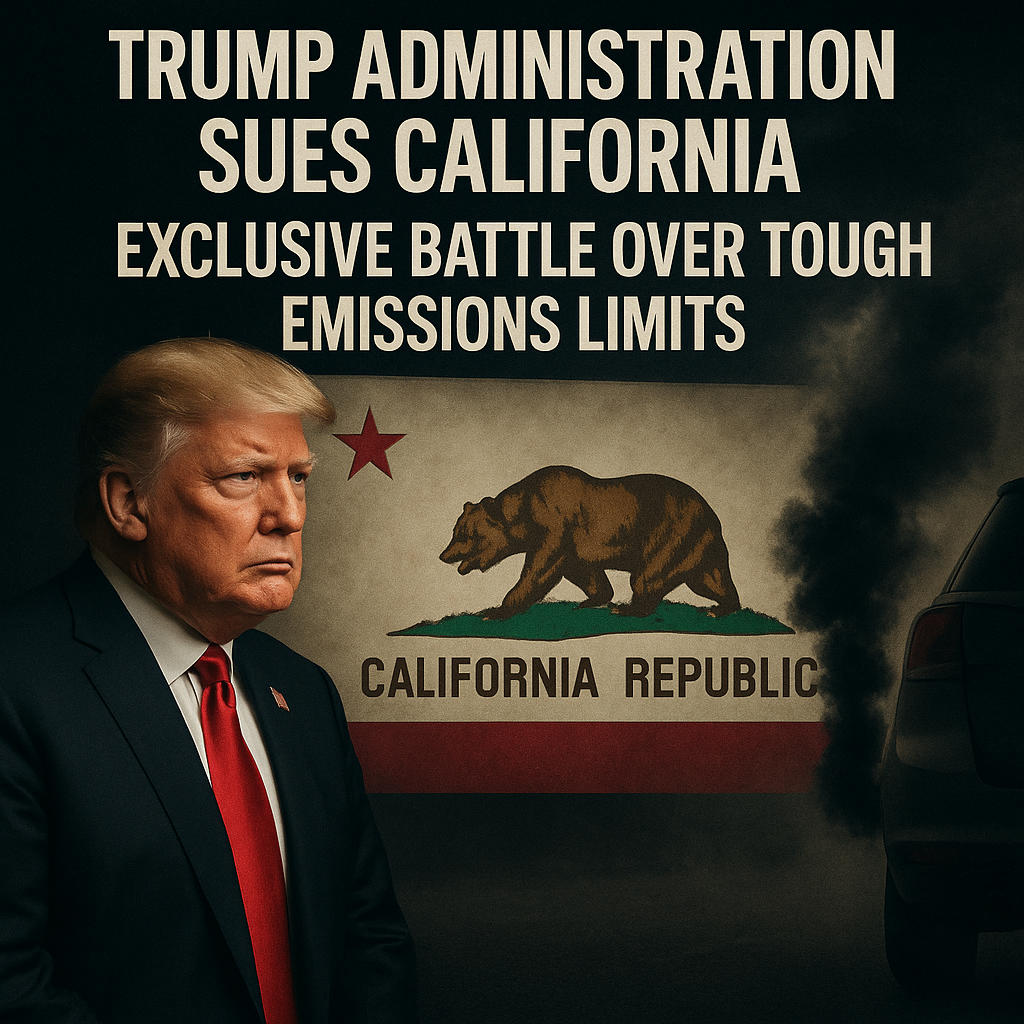
Trump Administration Sues California: Exclusive Battle Over Tough Emissions Limits
The Trump administration’s decision to sue California marked a significant turning point in the ongoing battle over environmental regulations in the United States. At the heart of this legal dispute are California’s ambitious and often stringent vehicle emissions standards, which the state has long used to combat air pollution and climate change. The clash highlights not only the tensions between federal and state authority but also the broader debate over the nation’s environmental future.
Background: California’s Emissions Standards
California has historically held a unique position in setting vehicle emissions standards under the Clean Air Act. Unlike other states, California is permitted to establish its own, often stricter, pollution controls, provided it receives a waiver from the Environmental Protection Agency (EPA). This waiver allows California to address its specific air quality challenges and serve as a model for more rigorous environmental policies nationwide.
For decades, California’s emissions limits have pushed the automotive industry toward cleaner technologies, encouraging innovations such as electric vehicles and advanced fuel efficiency. Many states have opted to follow California’s lead, adopting its standards to improve their own air quality.
The Trump Administration’s Challenge
In recent years, the Trump administration has taken a markedly different stance on environmental regulation, prioritizing deregulation and economic growth over stricter emissions guidelines. The administration argued that California’s tougher standards exceed federal authority, complicate compliance for automobile manufacturers, and increase vehicle costs for consumers.
The lawsuit filed by the Department of Justice under the Trump administration accused California of violating the Clean Air Act by setting emissions rules more stringent than federal standards without proper approval. Officials contended that a fragmented regulatory landscape—where automakers have to meet multiple different standards—would disrupt the national automotive market.
Focus on the Legal Battle Over Emissions Limits
The focus of the lawsuit lies on the “Exclusive Battle Over Tough Emissions Limits,” a phrase that accurately captures the high-stakes confrontation between state and federal governments. California maintains that the EPA’s historical obligation to grant the waiver is clear and that the state’s right to self-regulate in pursuit of cleaner air is consistent with federal law.
Legal experts note that this dispute centers on constitutional questions about federalism and the division of powers between the states and the federal government. The outcome could have far-reaching consequences, not just for California but for environmental policies across the country.
Industry and Environmental Stakeholders Weigh In
The automotive industry has found itself caught in the middle of this contentious battle. Some manufacturers supported the Trump administration’s push for a single national standard to reduce compliance complexities and costs. However, other automakers have backed California’s stricter limits, seeing them as a driving force for green innovation and long-term sustainability.
Environmental groups have strongly criticized the administration’s legal actions, asserting that weakening emissions standards threatens public health and undermines efforts to combat climate change. California’s policies, they argue, serve as a necessary blueprint to reduce greenhouse gases and accelerate the transition to cleaner transportation.
Implications for the Future of Environmental Regulation
The lawsuit filed by the Trump administration against California is more than just a legal dispute; it underscores the broader ideological divide over environmental governance in the United States. If the federal government succeeds in overturning California’s standards, it could signal a rollback of state-level environmental leadership and potentially slow the progress in reducing emissions nationwide.
Conversely, a ruling in favor of California may empower other states to pursue ambitious climate policies, despite opposition from federal agencies. Such an outcome could reinforce the role of states as laboratories for policy innovation and advocates for sustainability.
Conclusion
The exclusive battle over tough emissions limits between the Trump administration and California encapsulates a critical conflict over the balance of power in environmental regulation. With millions of vehicles on American roads and the urgent need to address air pollution and climate change, the stakes are incredibly high. As the legal proceedings unfold, the direction set by this case will shape the pace and scope of the nation’s environmental policies for years to come. Whether federal uniformity or state autonomy prevails will determine how effectively the United States meets its clean air and climate goals in the coming decades.