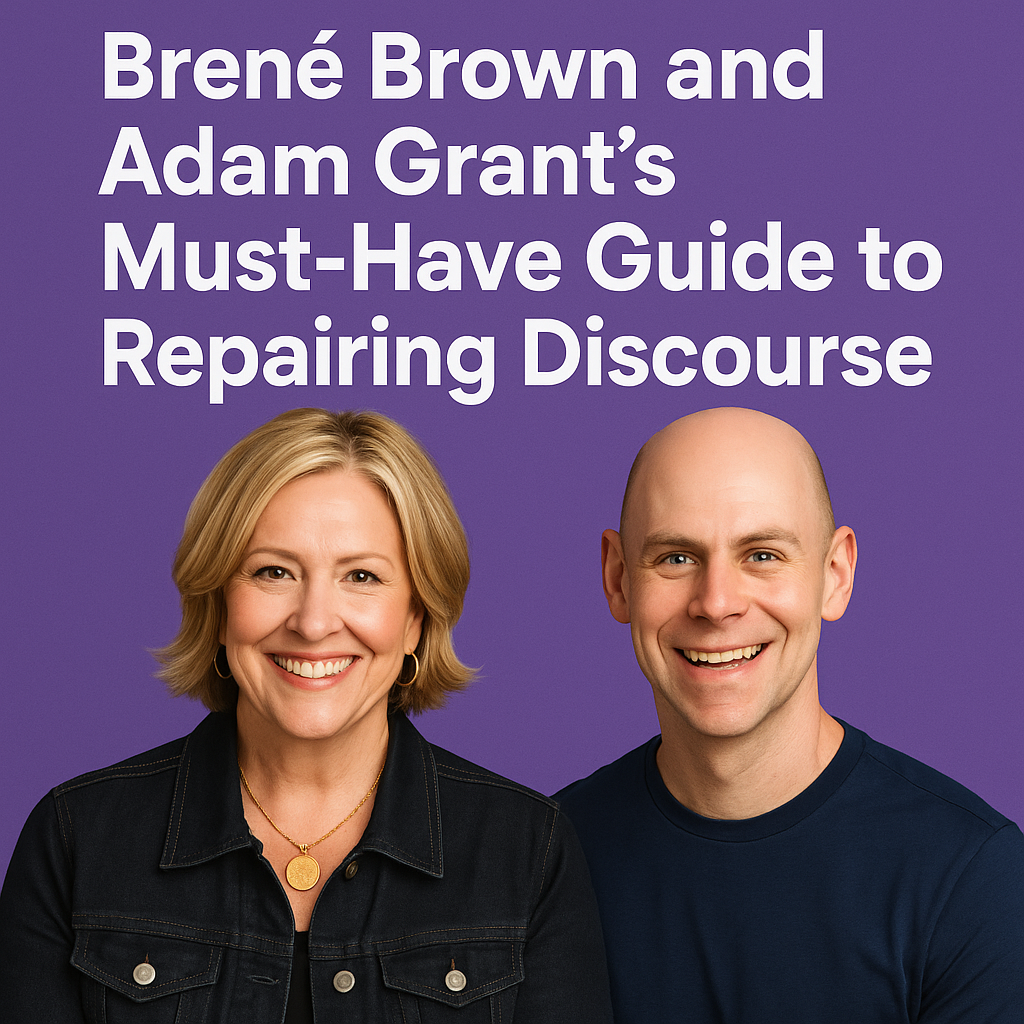
Brené Brown and Adam Grant’s Must-Have Guide to Repairing Discourse
In today’s polarized world, where conversations often turn into conflict and meaningful dialogue becomes rare, Brené Brown and Adam Grant offer a much-needed guide to repairing discourse. Their combined expertise in vulnerability, courage, psychology, and organizational behavior provides profound insights into how we can bridge divides, foster understanding, and create healthier communication environments.
Understanding the Breakdown in Modern Discourse
Brené Brown, known for her groundbreaking work on vulnerability and empathy, alongside organizational psychologist Adam Grant, who specializes in improving workplace culture and decision-making, have explored the roots of fractured communication. The breakdown often stems from deeply ingrained biases, fear of judgment, and the widespread culture of defensiveness. When people feel attacked or unvalued, conversation shuts down, emotional walls rise, and meaningful exchange becomes impossible.
The first step in repairing discourse is recognizing these barriers—not just in others, but within ourselves. Both Brown and Grant emphasize the importance of self-awareness. By understanding our triggers and communication patterns, we’re better equipped to approach difficult conversations with openness rather than defensiveness.
Building Bridges Through Vulnerability and Empathy
Central to Brown’s work is the concept of vulnerability—the courage to be seen, heard, and understood even when it involves risk or discomfort. Applying vulnerability in conversations shows others that it’s safe to express their thoughts without fear of judgment or ridicule. This is a powerful antidote to the skepticism and mistrust that often permeate public and private discourse alike.
Adam Grant complements this by encouraging curiosity and active listening. Rather than seeking to win an argument, he suggests adopting the mindset of a “thoughtful challenger,” someone who genuinely wants to understand different perspectives and questions assumptions tactfully.
Together, their approach promotes empathy, which Brown defines as connecting with another’s experience without trying to fix or dismiss it. Empathy in dialogue allows for mutual respect and helps de-escalate conflicts, making it easier to find common ground.
Practical Steps from Brown and Grant to Repair Discourse
To cultivate healthier conversations, Brené Brown and Adam Grant propose practical strategies that anyone can incorporate:
1. Pause and Reflect Before Responding
Emotional reactivity often exacerbates conflicts. Brown urges a moment of self-reflection to check what we’re feeling and why before speaking. This pause curbs impulsive reactions and permits more thoughtful contributions.
2. Use “I” Statements to Express Your Perspective
Framing opinions through “I” statements rather than accusations (“I feel…” instead of “You always…”) reduces defensiveness and opens space for dialogue rather than argument.
3. Embrace Discomfort as Part of Growth
Conversations about sensitive topics feel uncomfortable, but Brown reminds us that discomfort is necessary for vulnerability and connection. Instead of avoiding tough talks, lean into the discomfort for the sake of deeper understanding.
4. Ask Open-Ended Questions
Grant stresses the power of questions that invite explanation rather than yes/no answers. This strategy encourages others to share their reasoning and emotions, enriching the conversation.
5. Assume Good Intentions While Being Ready to Clarify
A foundation of mutual respect assumes that others aren’t trying to hurt or demean us. If something feels wrong, asking for clarification rather than jumping to conclusions helps preserve trust.
6. Recognize and Acknowledge Shared Goals
Discourse often fails when conflicting parties forget they want similar outcomes (e.g., safety, fairness, respect). Highlighting shared goals can foster cooperation and reduce polarization.
Why This Guide Matters More Than Ever
In an era dominated by social media echo chambers and rapid-fire judgments, the methodologies offered by Brown and Grant serve as a vital roadmap for repairing not just individual conversations but the broader social fabric. Whether in families, workplaces, or public debates, their insights encourage us to move beyond simplistic “us versus them” mentalities toward more nuanced, respectful interactions.
Their guide ultimately teaches that repairing discourse is an ongoing practice—not a one-time fix. It involves vulnerability, patience, real curiosity, and above all, the willingness to listen deeply and engage with compassion.
Final Thoughts: Transforming Conflict into Connection
Brené Brown and Adam Grant’s guide to repairing discourse reminds us that courageous conversations are the heart of human connection. By embracing vulnerability and curiosity, we transcend barriers of misunderstanding and build bridges of empathy. This approach changes not only the way we communicate but how we relate to each other on the deepest level.
In a fractured world, their combined wisdom shines as a beacon, encouraging everyone to become active participants in healing discourse and cultivating communities where every voice is heard and valued. As we practice these principles, we contribute to a more compassionate and connected society—one conversation at a time.