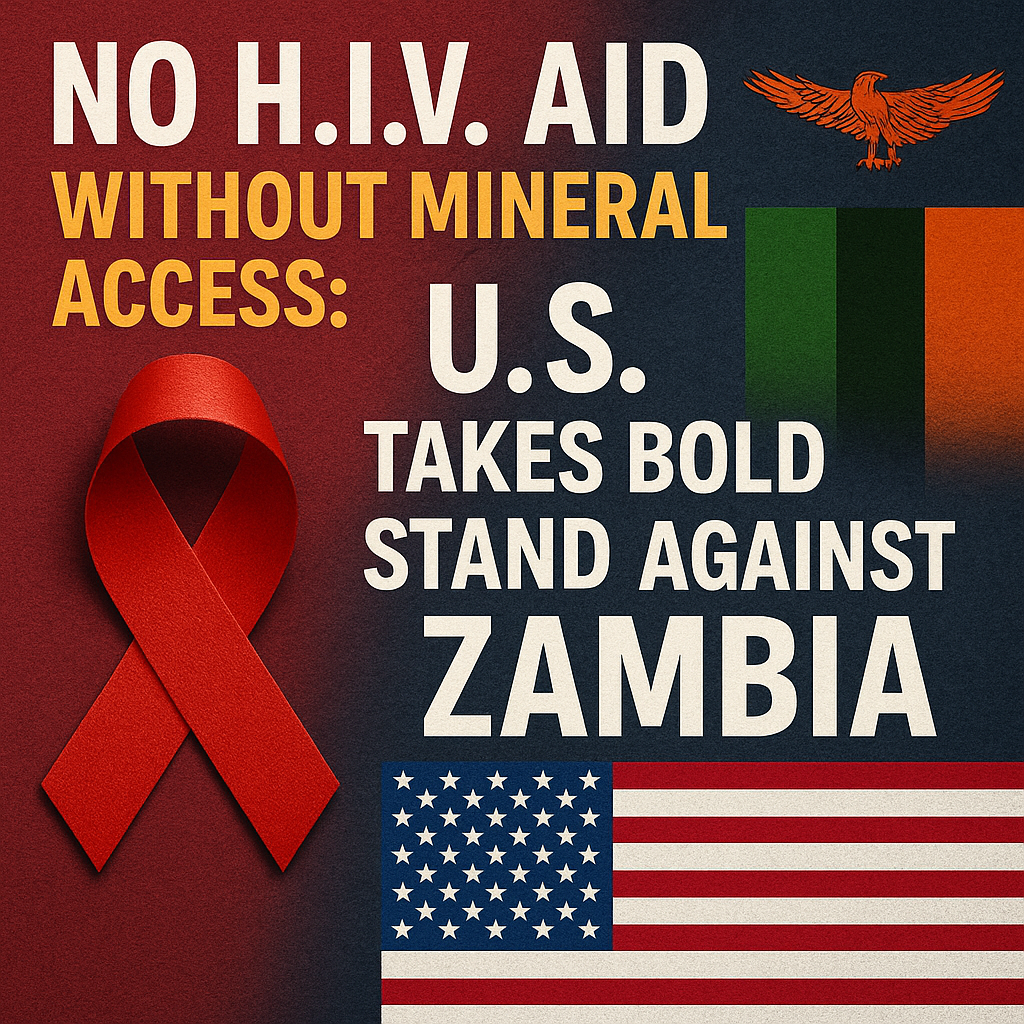
No H.I.V. Aid Without Mineral Access: U.S. Takes Bold Stand Against Zambia
The recent policy stance articulated by the U.S. administration has sent ripples through international aid and diplomatic circles: no H.I.V. aid without mineral access. This uncompromising position toward Zambia has drawn significant attention, illuminating the complex interplay between global health initiatives and natural resource diplomacy. As one of Africa’s key mineral exporters, Zambia stands at a critical juncture, where its cooperation on mineral access appears to be tied directly to the flow of crucial H.I.V. assistance from the United States.
Understanding the Link Between Mineral Access and Aid
Historically, U.S. foreign aid programs, particularly health-related ones, have operated independently from economic and trade negotiations. However, the approach has evolved, especially in resource-rich developing countries. Minerals—ranging from copper and cobalt to rare earth elements—are strategic commodities essential for various technological industries, including electric vehicles, electronics, and defense. Zambia’s vast mineral wealth makes it a significant player in the global supply chain.
The U.S. administration’s decision to withhold H.I.V. aid unless Zambia provides favorable mineral access reflects a broader strategic pivot. Rather than indiscriminately channeling funds, aid is now being leveraged as a tool to achieve broader economic and geopolitical objectives. This aligns with an increasing emphasis on securing supply chains and reducing dependency on less stable or adversarial sources of critical minerals.
The Impact on Zambia’s Health Sector
Zambia has long been a beneficiary of international assistance in its fight against H.I.V./AIDS—a disease that has profoundly impacted the country’s population. U.S. aid programs have contributed significantly to testing, treatment, and education efforts that have saved countless lives. The conditionality imposed threatens to disrupt this progress.
Without sustained funding and resources, Zambia could see a surge in untreated cases, undermining years of public health advancement. Communities dependent on assistance for antiretroviral therapy, prevention campaigns, and maternal health services face increased vulnerability. The potential health crisis extends beyond Zambia’s borders, as unchecked H.I.V. epidemics risk cross-border transmission, affecting regional stability and public health.
Diplomatic Tensions and Economic Considerations
The U.S. stance has introduced new diplomatic tensions between Washington and Lusaka. Zambia’s government faces a delicate balancing act: safeguarding the health of its citizens while negotiating terms favorable or at least acceptable regarding mineral exploitation. This unprecedented linkage of health aid to economic access has drawn criticism from international organizations, health advocates, and some diplomatic quarters, who argue that health assistance should be unconditional and based solely on need.
On the other hand, proponents argue that this approach incentivizes greater cooperation and transparency in mineral trade agreements, potentially benefiting both parties. For the U.S., securing mineral access is not merely an economic interest but also a matter of national security, especially considering competition from countries like China, which have extensively invested in African mineral sectors.
Broader Implications for International Aid and Resource Politics
The precedent set by linking H.I.V. aid to mineral access raises fundamental questions about the future of international aid. Is this the beginning of a new era where foreign assistance becomes an instrument for securing strategic resources? While this might yield short-term gains for donor countries, it risks compromising the humanitarian ethos underpinning global health initiatives.
Moreover, it amplifies concerns about the sovereignty of recipient countries. When fundamental health services are contingent upon geopolitical and economic factors, governments must navigate complex trade-offs between immediate public health needs and long-term national interests.
Potential Pathways Forward
Resolving this impasse requires diplomatic finesse and innovative solutions. Multilateral discussions involving U.S. officials, Zambian government representatives, global health agencies, and private sector stakeholders could pave the way for consensus-driven frameworks that respect both health imperatives and economic interests.
One possibility is establishing transparent, mutually beneficial mineral agreements that include provisions safeguarding community welfare and environmental standards, coupled with uninterrupted health aid. Additionally, expanding partnerships with other international donors and organizations might help Zambia diversify its support base, reducing vulnerability to any single country’s conditionalities.
Conclusion
The assertive U.S. policy of withholding H.I.V. aid without mineral access marks a significant shift in how aid and diplomacy intersect. While it underscores the strategic importance of critical minerals in today’s geopolitical landscape, it also challenges traditional perceptions of unconditional humanitarian assistance. For Zambia, the stakes are extraordinarily high, as decisions made in diplomatic corridors will directly impact the health and well-being of millions. The coming months will be crucial in determining whether this bold stance fosters constructive cooperation or deepens divisions, with implications extending far beyond the immediate contours of aid and minerals.