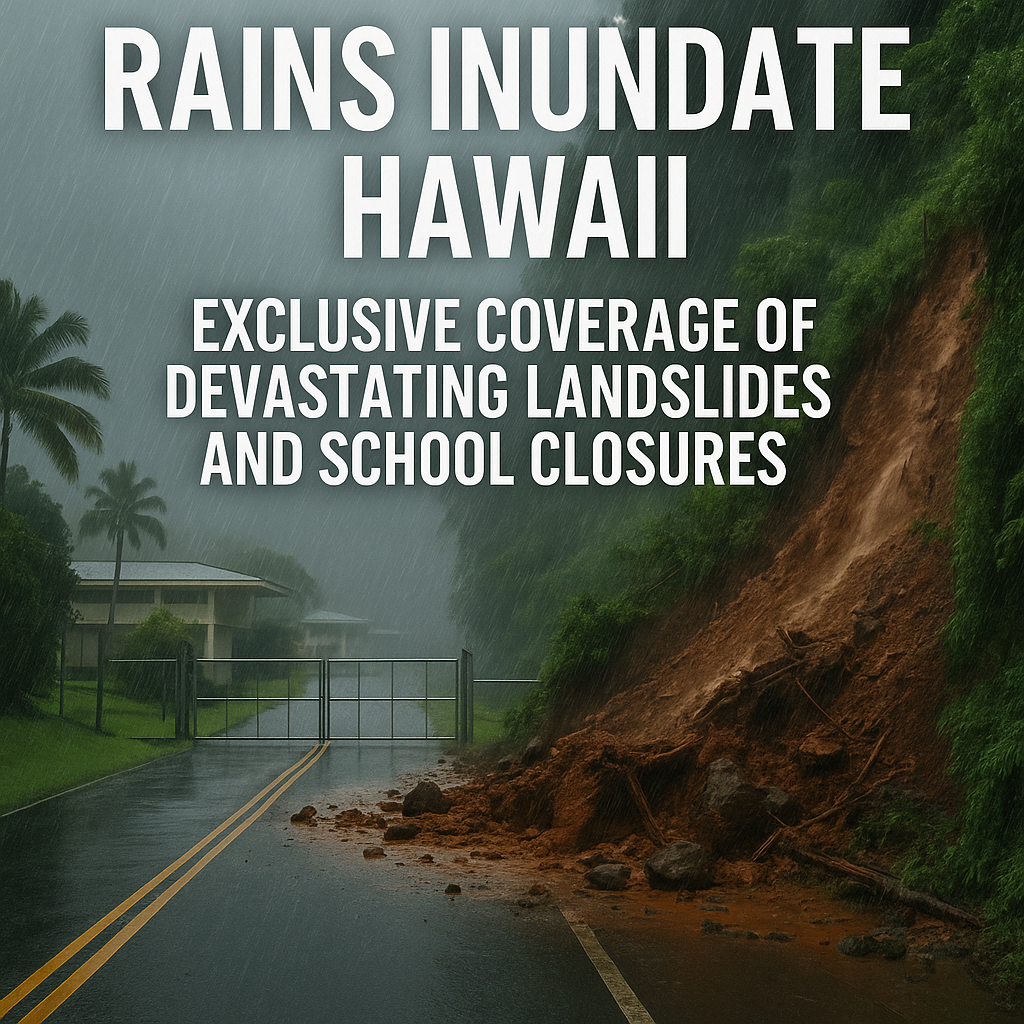
Rains Inundate Hawaii: Exclusive Coverage of Devastating Landslides and School Closures
In recent weeks, relentless rains have inundated Hawaii, wreaking havoc across the island chain and triggering a series of catastrophic events. The steady downpour, which brought much-needed water after months of dry spells, soon turned perilous, leading to massive landslides, infrastructure damage, and unexpected school closures. As the islands grapple with this natural emergency, communities are rallying together to navigate the aftermath.
The Deluge That Unleashed Devastation
Hawaii, known for its lush landscapes and tropical climate, occasionally experiences heavy rainfall, but this year’s persistent storms have been exceptional. Meteorologists confirm that the islands have been subjected to record-breaking precipitation levels, with some areas receiving over a foot of rain within just a few days. These extraordinary conditions overwhelmed natural drainage systems and destabilized mountainous terrain vulnerable to landslides.
The mountainous topography of Hawaii, combined with the heavy rains, created perfect conditions for earth movements. Saturated soil layers lost cohesion, causing massive slides that flowed down slopes, engulfing roads, homes, and farmlands. Some landslides were so extensive that NASA satellite imagery captured visible scars on the island’s terrain.
Impact on Communities and Infrastructure
The human toll of these landslides has been deeply distressing. Several neighborhoods were abruptly cut off, with access routes blocked or destroyed. Emergency responders had to perform swift evacuations, relocating hundreds of residents to safer zones. Unfortunately, some communities reported property damage amounting to millions of dollars, with many residents facing long-term displacement.
Road closures became widespread across island highways and local streets, complicating travel for both residents and essential services. Repair crews are facing challenging conditions, as continuous rain slows debris removal and stabilization efforts. Power outages also compounded difficulties, affecting communication and critical infrastructure.
School Closures and Education Disruptions
One of the immediate consequences of the floods and landslides has been the closure of schools throughout the affected regions. Local education authorities prioritized student safety, announcing closures that lasted multiple days—or in some cases, weeks. Many school buildings suffered minor flooding or structural concerns due to the saturated ground beneath.
For families and educators, these closures disrupted learning routines and necessitated swift adaptation. School districts swiftly pivoted to remote learning platforms, ensuring that students could continue their education despite physical school closures. Additionally, special arrangements were made for students reliant on school-provided meals and services.
Emergency Measures and Community Response
In response to the crisis, the state government declared a state of emergency, mobilizing resources to assist affected communities. Relief agencies and volunteers have coordinated efforts to deliver essential supplies, provide temporary shelter, and support residents in recovery efforts. Public safety announcements urged residents to avoid travel through hazardous zones, especially near landslide-prone areas.
Community organizations sprang into action, establishing donation centers and support hotlines. Social media became a critical platform for information sharing, enabling people to report hazards and request help rapidly.
The Road to Recovery and Preventive Strategies
As the rain begins to subside, focus shifts toward a long-term recovery plan. Infrastructure repairs remain a priority to restore safe travel and access to essential services. Hazard assessments are underway, identifying vulnerable areas and strengthening early warning systems.
Experts emphasize the importance of sustainable land management to minimize future landslide risks. Reforestation, better drainage, and land-use regulations are among the strategies being explored. Awareness campaigns aim to educate residents about emergency preparedness and evacuation protocols.
Conclusion
Hawaii’s recent rains have unveiled the powerful forces of nature, reminding us of the delicate balance within island ecosystems. While the immediate devastation was significant, the resilience and unity displayed by communities and emergency responders shine through as a beacon of hope. With coordinated efforts and lessons learned, Hawaii is working diligently to overcome this challenge and build a stronger, safer future in the face of natural disasters.