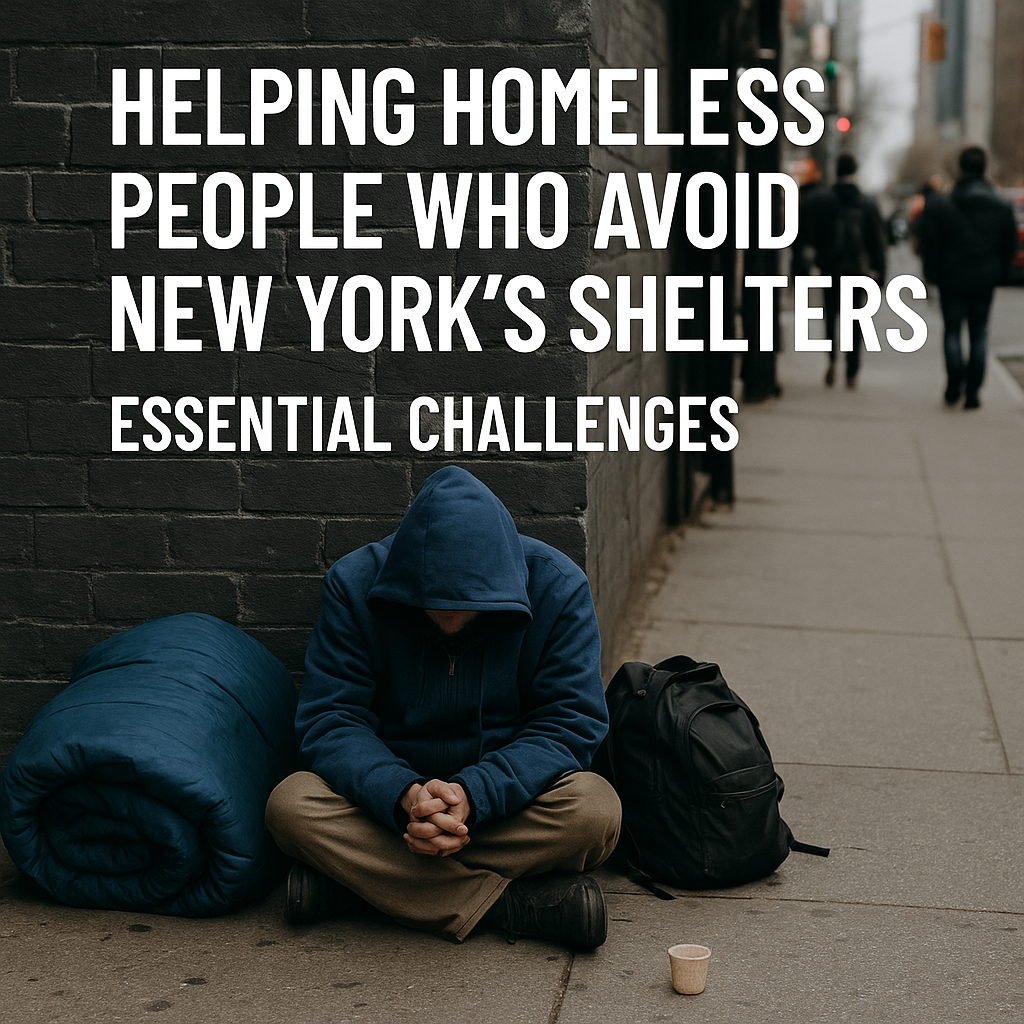
Helping homeless people who avoid New York’s shelters presents a unique and complex set of challenges that social workers, nonprofit organizations, and city officials continuously strive to address. Despite the city’s extensive network of shelters and support services, a considerable segment of the homeless population prefers to stay on the streets or in other unsheltered locations. Understanding and effectively assisting this group requires insight into the underlying reasons for shelter avoidance, alongside tailored approaches that meet their specific needs and concerns.
Understanding Why Homeless People Avoid New York’s Shelters
One of the biggest hurdles in helping homeless people who avoid New York’s shelters is recognizing the reasons behind their reluctance. Many individuals reject shelters due to past traumatic experiences within these environments, such as violence, theft, overcrowding, and lack of privacy. For others, stringent shelter rules—like curfews and restrictions on personal belongings or substance use—create an environment that feels more like institutional control rather than support.
Additionally, some people experiencing homelessness maintain shelters are unsafe or discriminating spaces. LGBTQ+ individuals, for example, may fear harassment or lack of acceptance in certain shelter settings. People who struggle with mental health issues or substance dependence might worry about the availability of appropriate services or face stigma from shelter staff or peers.
These factors contribute to a natural inclination for some to remain on the streets, despite the dangers and hardships involved. This avoidance makes traditional outreach methods and service provision far more complicated.
Challenges in Providing Effective Outreach and Support
Helping homeless people who avoid shelters involves overcoming multiple logistical and trust-related barriers. Outreach teams often find it difficult to locate those who are unsheltered, especially if they move frequently or avoid contact with authorities. Building relationships based on trust is vital but requires significant time and sensitivity.
Safety is another key concern. Outreach workers must operate in diverse and sometimes hazardous environments, and they often face resistance, especially if individuals fear institutional involvement. The stigma surrounding homelessness and mental health further complicates this, making it harder for outreach personnel to engage people in meaningful conversations about available help.
Moreover, many people who avoid shelters are dealing with complex issues such as chronic health conditions, addiction, and trauma. Addressing this intersectionality demands integrated approaches that combine housing, healthcare, counseling, and social support rather than isolated services.
Innovative Approaches to Bridge the Gap
To meet these challenges, New York City has developed and supported innovative programs specifically tailored to assist homeless individuals who avoid traditional shelters. One such approach is the expansion of supportive housing models, which offer permanent, affordable housing combined with onsite services like mental health care and addiction treatment. These environments provide privacy and stability—two elements that many shelter-averse individuals seek.
Street outreach programs are also diversifying their tactics by incorporating harm reduction strategies. Instead of insisting on abstinence or a strict set of rules, workers build nuanced relationships that respect clients’ autonomy while gradually introducing pathways to recovery and stable housing.
Additionally, mobile medical clinics and drop-in centers serve to provide critical health services in places where shelter avoidance is common. By meeting people “where they are,” these services reduce the need to enter institutional settings that some individuals distrust.
The Role of Community and Policy
Engaging local communities and advocacy groups is essential in this effort. Neighborhoods can offer informal networks of support and foster greater awareness of the needs of unsheltered homeless individuals. Public education campaigns help reduce stigma and promote a more compassionate city-wide response.
On a policy level, addressing systemic factors such as affordable housing shortages, mental health funding, and employment opportunities has a direct impact on reducing shelter avoidance. Policies that emphasize housing first—a model that prioritizes giving homeless individuals a home before addressing other issues—have seen success in helping many transition off the streets.
Moving Forward with Empathy and Understanding
Helping homeless people who avoid New York’s shelters is undeniably challenging but crucial for an inclusive, humane approach to homelessness. Success requires patience, empathy, and a willingness to rethink conventional practices. Tailoring interventions to respect the dignity and complex realities of these individuals makes it possible to reduce the risks associated with unsheltered homelessness and ultimately support them towards stability and well-being.
By continuing to innovate outreach methods, expanding supportive housing, and fostering cross-sector collaboration, New York can better serve this vulnerable population while addressing the root causes of shelter avoidance. It is a compassionate pursuit that underscores the city’s commitment to leaving no one behind—no matter how hard they may be to reach.